Year-end tax check for Malaysian employees: how TP1 and TP3 can ease your PCB
Eternity Job Career Team6 November 2026 · 10 min read
Daniel started a new job in June. Since then he has bought a laptop, renewed his gym membership and taken his parents to Taman Negara. Over lunch, a colleague asks, "Have you sent your TP1 yet?" Daniel smiles and nods, then quietly searches for what TP1 means.
If tax forms make you feel the same way, please don't worry. These two forms are much friendlier than they sound, and a few minutes now could mean fewer surprises when you file next year.
Let's go through them together.
This guide is general information for employees who are tax residents in Malaysia. It isn't tax advice. For your own situation, LHDN or a licensed tax agent can help.
In this article
The short answers
A quick word on PCB
TP1: telling payroll about your reliefs
Reliefs worth checking for 2026
TP3: if you changed jobs this year
Why your bonus month can look so heavily taxed
Do you still need to file?
A message you can send to HR
Your year-end tax checklist
The short answers
What does TP1 do? It lets you claim eligible reliefs through payroll, so your monthly tax can go down now instead of waiting for a refund later.
What does TP3 do? It tells your new employer what you earned and paid earlier this year, so your monthly tax is based on your whole year.
What if you miss them? Your reliefs aren't lost because you skipped TP1. You can still claim them when you file. TP1 and TP3 change your monthly deductions, not the tax rules.
A quick word on PCB
PCB, or potongan cukai bulanan, is the income tax your employer deducts each month and sends to LHDN. It's an advance payment based on an estimate of your tax for the year. Our guide on how to read your payslip shows where it appears.
Because it's an estimate, payroll only knows what it has been told. That's where these two forms come in.
TP1: telling payroll about your reliefs
If you've paid for something that qualifies for tax relief, TP1 lets payroll take it into account. Here's how it usually works:
Check that PCB is being deducted. If there's no PCB on your payslip, TP1 won't change anything. For example, a single person earning RM3,000 a month with the usual EPF generally has no PCB deducted.
Add up your eligible spending. Claim what you've actually paid for and can support with receipts.
Ask HR how to submit. Some companies use a paper form, and others use their payroll system. Either way, the form goes to your employer, not to LHDN.
Wait for approval. Your employer approves the claim for a particular month, so it helps to ask about the payroll cut-off.
Keep your receipts safe. You don't need to give them to your employer, but you do need to keep them for seven years in case LHDN asks.
You can submit TP1 more than once in the same year, so there's no need to wait until you have everything.
What difference will it make?
Let's look at an example. Say you're single, earn RM5,000 a month, pay the usual 11% EPF and have no other reliefs. Your PCB would be about RM110 a month.
Now say you submit a TP1 for RM2,000 of lifestyle spending in time for November payroll:
Your chargeable income for the year drops by RM2,000
At your 6% tax band, that's RM120 less tax for the year
Payroll spreads this over the two months left, so your PCB falls to about RM50 in November and December
That brings us to a gentle reminder: a relief isn't a refund of what you spent. It reduces the income you're taxed on, so RM1,000 of relief saves RM60 in the 6% band and RM190 in the 19% band. It's lovely when something you already need qualifies, but it's rarely a good reason to buy something you don't.
One small privacy point: TP1 lists your claims by category, and someone in HR or payroll will see it. If you'd rather keep a medical claim private, you can simply claim it when you file instead.
Reliefs worth checking for 2026
These come from LHDN's 2026 TP1 notes. It isn't the full list, and each relief has its own conditions, so do check the notes before claiming.
Relief | Annual limit | Includes |
|---|---|---|
Lifestyle | RM2,500 | Books, computers, smartphones, tablets, internet subscriptions and personal development courses |
Sports | RM1,000 | Sports equipment, facility fees, competition fees, and gym or training fees |
Domestic tourism | RM1,000 | Entrance fees to places such as museums, national parks and zoos, plus arts and cultural programmes |
Medical for you, your spouse or child | RM10,000 | Serious illness and fertility treatment, plus check-ups, vaccinations and dental care, which have smaller limits |
Medical and care for parents or grandparents | RM8,000 | Medical and special needs care and carers, with conditions. Check-ups and vaccinations are limited to RM1,000 |
Childcare and kindergarten | RM3,000 | Fees at registered centres, including transit centres, for children aged 12 and below |
SSPN | RM8,000 | Your net savings for the year |
PRS and deferred annuity | RM3,000 | Contributions or premiums paid |
Education and medical insurance | RM4,000 | Qualifying premiums |
A few details that are easy to miss:
Childcare is wider this year. For 2026, it covers children up to 12 and registered transit centres, where it used to stop at age six.
Domestic tourism is a 2026 relief tied to Visit Malaysia Year. It's for entrance and participation fees. It doesn't cover hotels or flights, and iMoney suggests keeping an official receipt rather than a booking confirmation.
Recognised skills courses: the notes list a RM2,000 limit for courses recognised by the Department of Skills Development, allowed until the 2026 year of assessment. If you were planning one, it's worth asking about the timing.
Topping up EPF for relief? Relief for EPF is capped at RM4,000 a year. If you earn about RM3,030 or more with 11% EPF, your compulsory contributions may already reach that, so a top-up may not add any relief. It can still be a good choice for your retirement savings.
Zakat works differently. It reduces your tax directly rather than your chargeable income. TP1 has a section for zakat paid outside your salary deductions.
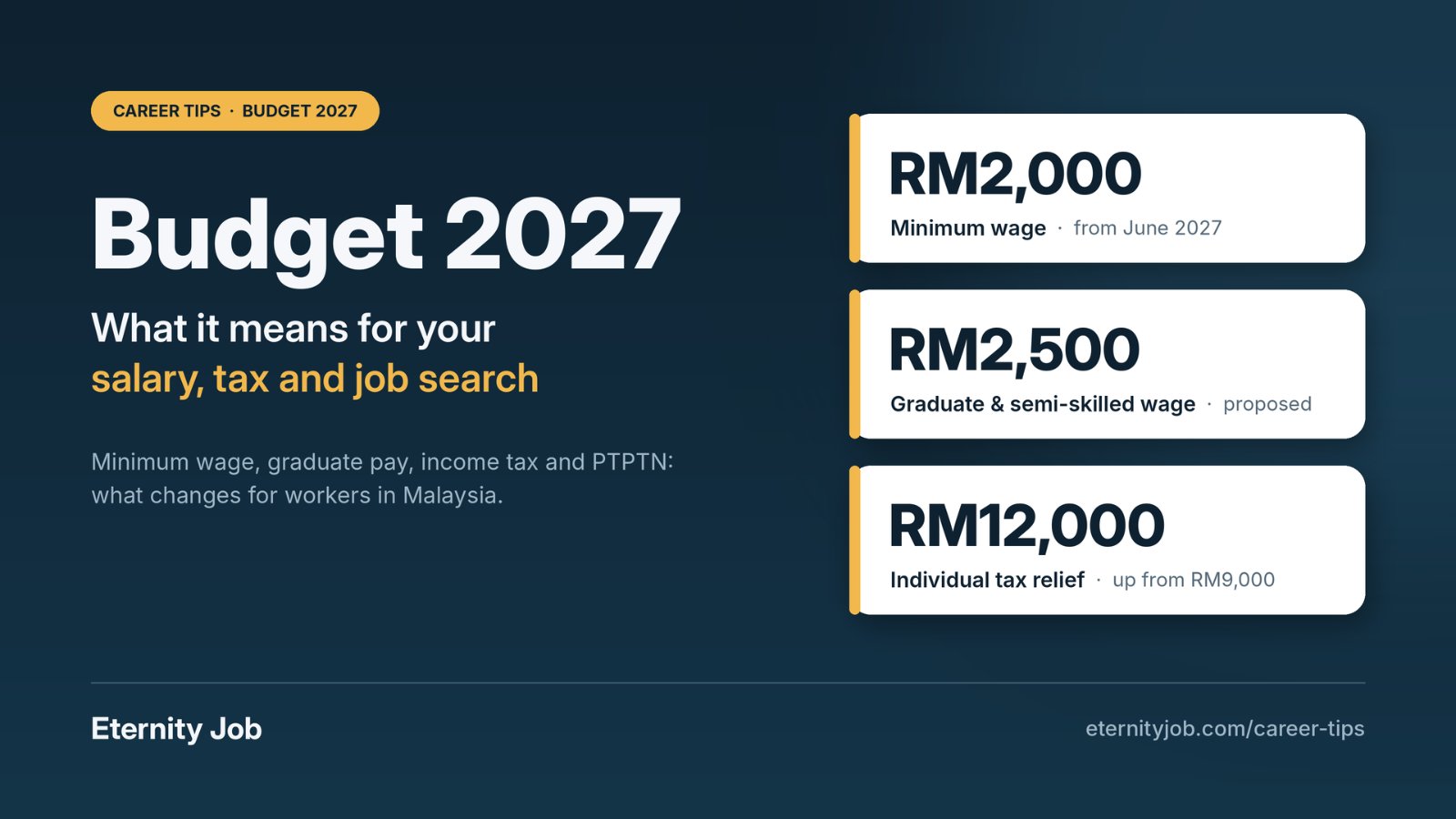
One more thing to watch for: you may have read about Budget 2027 changes, such as a RM12,000 individual relief or AI subscriptions under lifestyle relief. These are proposed from the 2027 year of assessment, so please don't count on them for this year's spending. Our Budget 2027 guide has more.
TP3: if you changed jobs this year
This is the form Daniel needs most.
Without TP3, your new employer works out your PCB as if your new salary were your only income this year. Too little tax may be deducted each month, and you could be surprised by a balance when you file.
TP3 gives your new employer the totals from your previous job this year, including:
Your remuneration
Your EPF contributions
Any zakat paid
The PCB already deducted
Any deductions you've already claimed
Your old payslips should have most of these figures, so it's a good idea to keep your final payslip when you leave a job.
Timing: it's best to hand TP3 to HR before your first new salary is processed. LHDN says employers must make sure new employees complete the form, so many HR teams will ask for it during onboarding. If yours didn't, you've done nothing wrong. Just mention it now and ask how they'd like to handle it.
At filing time: each employer should give you a Form EA for the period you worked with them, usually by the end of February. You'll need to include your income from both jobs when you file.
Why your bonus month can look so heavily taxed
If your bonus arrives and your PCB suddenly jumps, please don't panic. Payroll works out the tax on your bonus by looking at your estimated income for the whole year, so that one month's deduction can look large.
It isn't an extra tax. It still counts as tax you've paid in advance, and the numbers are settled when you file. If you're thinking about your next move, our guides on annual bonus and increments and whether to resign before or after your bonus may help too.
Do you still need to file?
For most people, TP1 and TP3 don't replace filing. You'll still use MyTax to report your income and claim your reliefs.
For income earned last year, the Form BE deadline was 30 April 2026, with e-Filing until 15 May. LHDN will confirm next year's dates, so it's worth checking in early 2027.
You may also hear about treating PCB as your final tax. It has conditions, including employment being your only income and working for the same employer for the full 12 months. So if you changed jobs this year, like Daniel, it wouldn't apply. If you've overpaid through PCB, filing is how you get the difference back.
A message you can send to HR
Not sure how your company handles these forms? A short note like this is all you need:
"Hi Encik Hafiz, I hope you're doing well. I'd like to submit a TP1 for some tax reliefs this year. Could you let me know how to submit it and the cut-off for this month's payroll? I also joined in June, so please let me know if you need a TP3 from me. Thank you so much for your help!"
Your year-end tax checklist
Check your latest payslip to see if PCB is being deducted
Gather this year's receipts into one folder, paper or digital
Compare your spending with LHDN's 2026 TP1 notes
Ask HR about the TP1 process and payroll cut-off
If you changed jobs, confirm that your TP3 has been handed in
Plan any spending you already needed, with your budget in mind
Keep your receipts for seven years
Look out for Form EA by the end of February, and file on MyTax
The bottom line
You don't need to become a tax expert by December. Knowing what these forms do is already most of the job. TP1 can give you back a little breathing room in your monthly pay, and TP3 helps you avoid a surprise later. And if you miss either one, you'll still have the chance to put things right when you file.
So grab your receipts and a cup of coffee, and send HR a quick message when you're ready. And if a fresh start is part of your 2027 plan, we'd love to help. Browse jobs on Eternity Job whenever the time feels right.